
Copiapoas are a special cacti that live in Chile on practically no water, grow slowly, and are in danger of being poached out of existence. I happen to have some that weren’t poached, and they have been blooming for me.
Copiapoas are native to the Atacama desert in northern Chile, the desert that gets maybe .6 inches of rain a year. In fact, my research said that some weather stations there have never reported getting any rain at all. It is considered the driest non-polar desert in the world. What this desert does get is fog, marine fog it is called, making the Atacama the largest fog desert on Earth. That fog is what enables the copiapoas to survive and grow very slowly. And growing very slowly is part of the problem with the poaching. Once taken, fewer plants are left to bloom to make seeds that eventually germinate and survive enough years in that desert to make more plants. If you happen to add copiapoas to your collection, don’t think you can just spray them and think that would be like the fog they get in the desert. We really can’t imitate how that fog works in nature; so water them like you do other cactus in your collection. Just don’t overdo it. Mine are all small young plants, but over maybe a hundred years’ time -really!– they get much bigger in the desert.
My copiapoas were legally grown from seed and get regular watering, so they are growing perhaps a bit faster than those in the desert. And a couple of them even surprised me this year with flowers. The first one to bloom was the Copiapoa Hemilis. The bud was showy on September 2; later that morning it started opening.
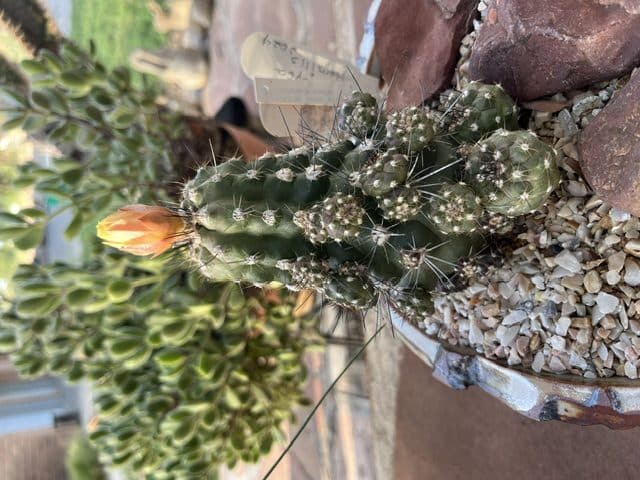
You will notice the pups that have developed along the body which were not there when I bought it. In natural habitat, these become dense clumps that are a characteristic of many of the varieties of the species.
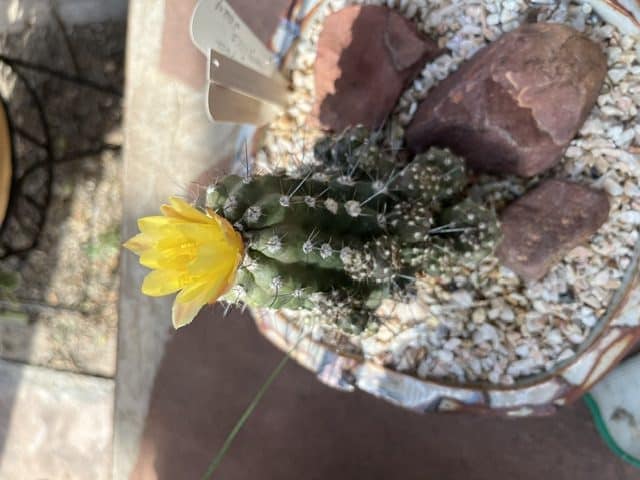
By 10:30-11:00 the bud had opened completely. As the days went on, it actually made more flowers which I am afraid I failed to take pictures of. But it was nice for them to surprise me popping up for the next few days.
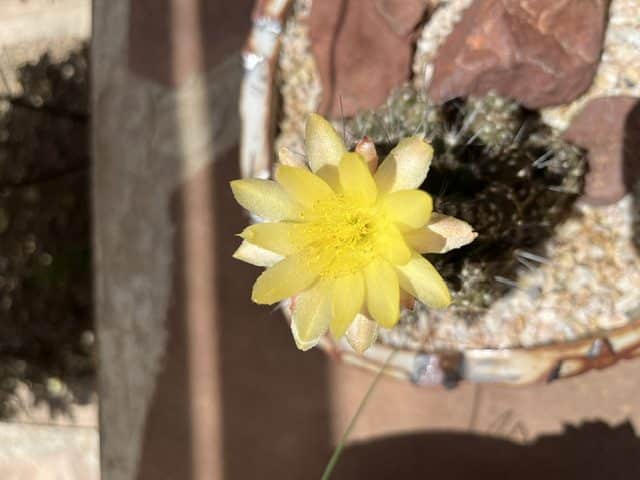
Then on September 8 discovered that the Copiapoa Tenuissima was also blooming. It made more than one cluster of yellow flowers.
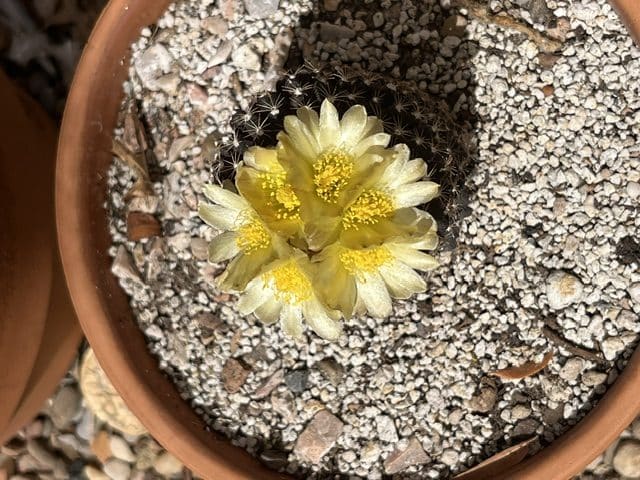
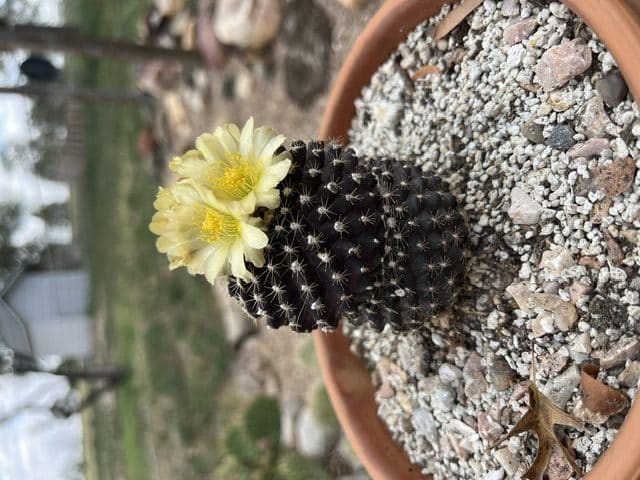
I have three other copiapoas. Notice the difference in the fleshiness of the body, the shape of the body, and spines on the different varieties. I have C. fieldlieriana,
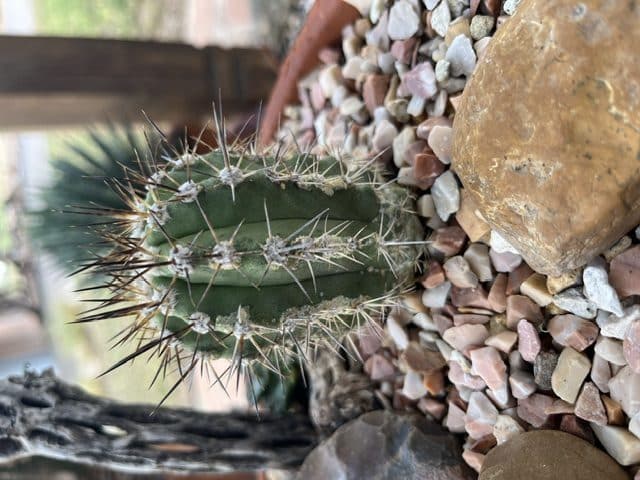
C. hypgoaea,
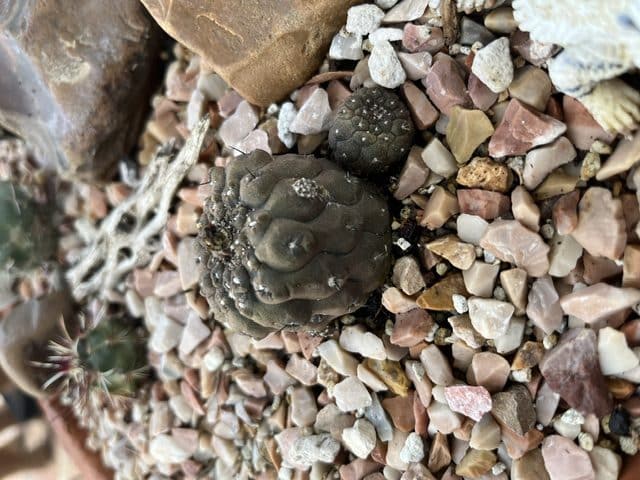
and C. Tenuissima Antopagasta Monstros.
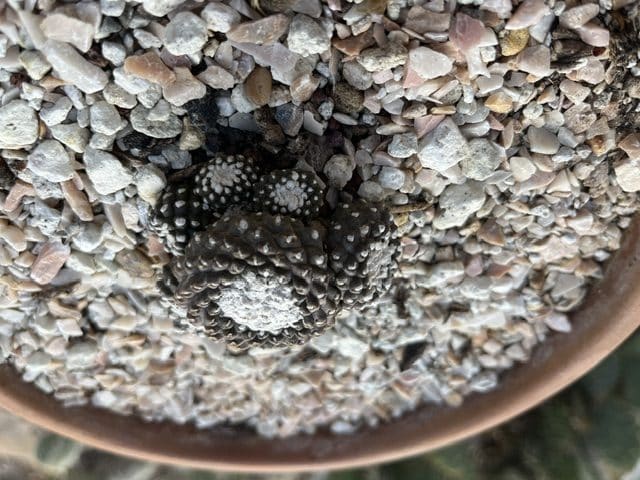
I don’t know when these copiapoas will bloom, but they will eventually. I won’t be around long enough to see them grow big and get really impressive like they eventually do in the Atacama Desert, but I will enjoy watching them grow and bloom when they are ready.
Recent Comments