
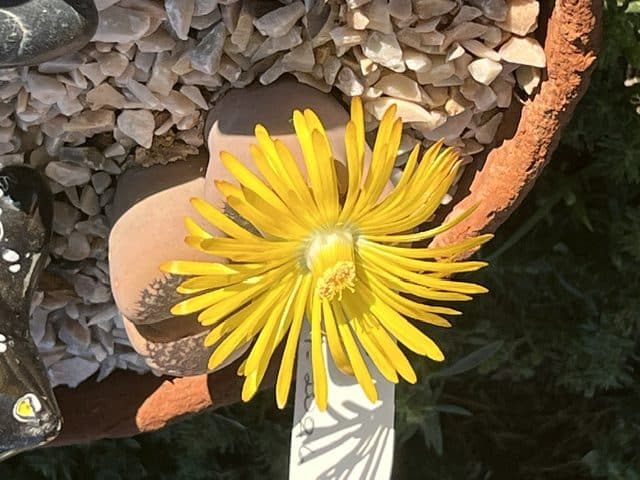
I’m a little late sharing this with you, and I meant to do it about a week ago when we had that week of gray, gloomy skies that wouldn’t go away, but a bright spot is always nice whenever we can get it. My lithops were blooming and were just too pretty to pass up.
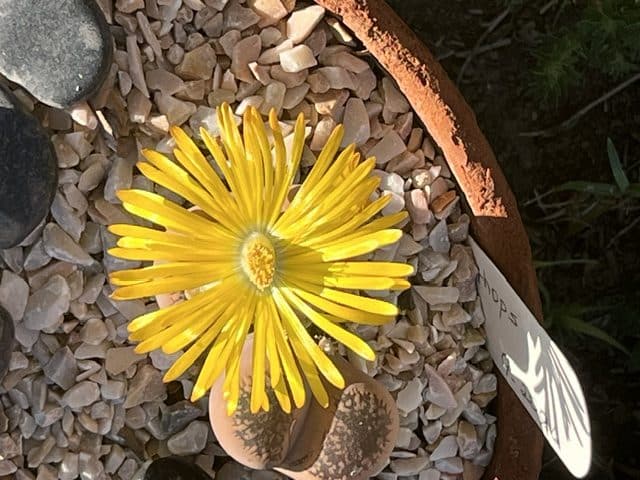
Lithops are native to South Africa and are Mesembryanthemums, usually referred to by the shortened and easier to say Mesembs. They are also referred to as living stones because that’s kind of what they look like in habitat, especially when they shrink and disappear into the ground when they go dormant. When the time is right, they plump up and bloom yellow or white flowers in the autumn, their growing season here. They need good light, maybe two hours of full sun or all day of filtered sun. i keep mine in filtered sun, and they seem to like that. Then when you bring them in for the winter, since most of them aren’t cold hardy, make sure they get as much light and sunshine as possible.
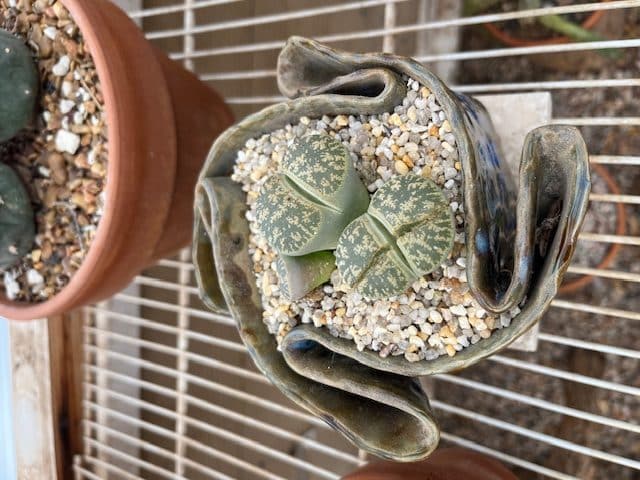
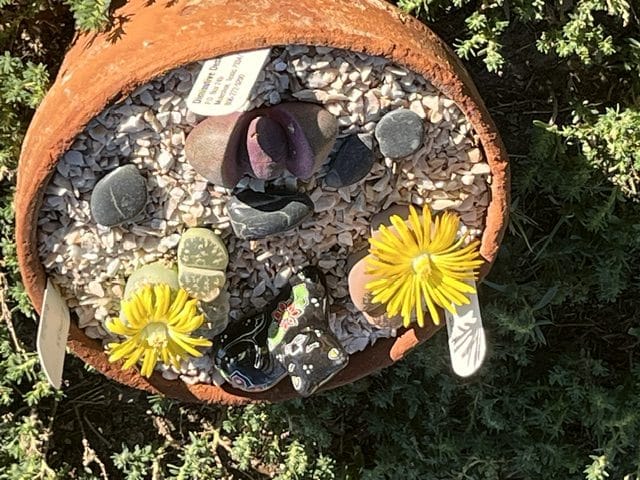
They come in a variety of colors, and their translucent top surface is called a leaf window, and it lets in sunshine and lets them go through photosynthesis, which keeps them alive. I just added this one to my collection, and it has not bloomed for me yet, but I wanted to show you what they look like without the flower. The one on the lower left that looks like it has an X on the top has split probably because it must have gotten too much water and has grown too fast. Sometimes cacti and other succulents will do that. Or it could have had an injury of some sort that caused the split. Or it just decided to do that! I bought it that way, so it will remain a mystery. The flower will come out of the area in the middle of the body like you see in the one on the top right.
Lithops are sometimes finicky to grow and easy to lose if they get too much water at the wrong time, the wrong time usually being after they have bloomed and want to go dormant. Some experts say no water during the summer, but I tend to give mine smaller amounts of water during the summer, and then more as we go into fall and I bring them in for the winter. If you are in doubt about the water, it is always better to err on the side of dry. New leaves will absorb moisture from the old leaves as they dry up. And by leaves, I mean the fleshy sections that make up the body of the plant. When the old leaves are dry and just about gone, that might be a sign to start watering a bit more.
So if you add one to your collection, don’t be distraught if it dies. Try another one, work on the watering schedule and location of the plant, and enjoy it when it does bloom for you.
Recent Comments